
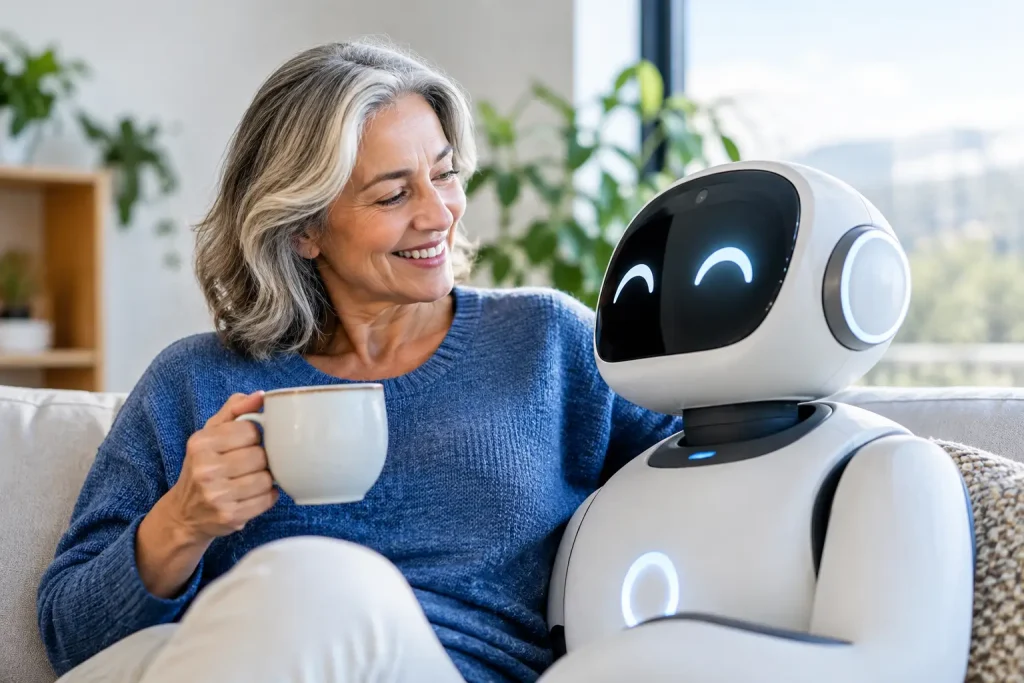
A helpful voice in the morning. A reminder about a favorite afternoon program. Someone to swap stories with after a quiet day at home. That is where AI companionship trends 2026 are headed: away from novelty and toward everyday support that feels personal, respectful, and easy to welcome into life.
For adults aged 55+ and the people who care about them, the most meaningful change is not that technology can talk. It is that it is learning to listen better, remember what matters, and fit around a person’s routines without taking over. The best companionship technology is designed to add warmth to the day while leaving room for family, friends, neighbors, and community.
AI companionship trends 2026: less novelty, more presence
Early conversations about AI often focused on what the technology could do. In 2026, the better question is how it makes someone feel. Does it feel easy to begin a conversation? Does it respond with kindness? Does it remember that someone enjoys gardening, jazz, baseball, or hearing about a grandchild’s latest adventure?
Companionship is becoming more personal because people expect it to be. A generic daily greeting can feel like a device checking a box. A warm conversation that picks up on yesterday’s story can feel more natural. That distinction matters, especially for people who value independence and want support that respects their preferences rather than asking them to adapt to complicated technology.
This does not mean AI should pretend to be human. Clear expectations build trust. A digital companion is still a tool, but it can be a remarkably thoughtful one when it is honest about what it is, attentive to the user’s choices, and designed around real daily moments.
Voice becomes the front door
Typing on a phone or tablet works well for many people, but voice is becoming central to companionship. Speaking is familiar. It allows a person to ask a question while making coffee, share a memory while looking through a photo album, or simply say hello without navigating screens and menus.
The strongest voice experiences will not sound like a quiz show host or a customer service script. They will allow pauses, follow the thread of a conversation, and respond in a way that feels calm and unhurried. For some people, text offers more comfort and privacy. For others, voice feels closer to sitting down with a friendly listener. Choice matters because there is no single right way to connect.
This shift also makes technology more approachable for adults who have never considered themselves “tech people.” The goal is not to learn a new system. The goal is to have a pleasant conversation, hear a useful reminder, play a favorite game, or find a small reason to smile.
Personalization moves beyond names and birthdays
A companion that knows a person’s name is pleasant. A companion that learns the rhythm of their life is more useful. In 2026, personalization is increasingly about preferences, routines, and conversation style.
Someone may enjoy a gentle prompt to stretch, an afternoon trivia question, or a chance to talk through plans for a family visit. Someone else may prefer fewer reminders and more open-ended conversations about travel, books, recipes, or memories. The experience should feel adjustable, not fixed.
This is also where care is needed. Personalization should never feel intrusive. People should be able to decide what a companion remembers, change those settings easily, and say no to a suggestion without being repeatedly pushed. Respect for personal boundaries is part of good companionship.
Connection is the goal, not replacing people
One of the healthiest AI companionship trends in 2026 is a clearer understanding of its role. A digital companion can make a quiet moment feel less empty, help someone stay engaged with interests, and make it easier to keep a daily rhythm. It cannot replace the irreplaceable value of a friend’s laugh, a family call, a neighbor stopping by, or a shared meal.
The most thoughtful platforms encourage real-world connection rather than competing with it. They can help a person remember to call a sibling, prepare questions for a grandchild, or reflect on a hobby they would like to share with others. Sometimes a short conversation is simply a bridge to feeling more ready to reach out.
For family caregivers, this approach can offer reassurance without creating the sense that they are handing off a relationship to technology. Distance, demanding work, and busy schedules are real. A companion can provide consistent day-to-day engagement while families continue to bring the love, history, humor, and presence that only they can offer.
Privacy becomes part of the experience
As AI companions become more personal, privacy is no longer a fine-print issue. It is a core part of whether people feel comfortable using them. Adults aged 55+ deserve clear answers about what is collected, what is remembered, who can see it, and how those choices can be changed.
In practical terms, good privacy means plain language and real control. A person should not have to search through confusing settings to understand their options. They should be able to choose whether family members receive permission-based insights, decide what information is shared, and change their mind at any time.
Families also benefit from healthy boundaries. A brief indication that a loved one has been engaging with their routine may bring comfort. That is very different from turning everyday conversations into surveillance. Trust grows when everyone understands that the older adult remains in control.
Gentle routines, not constant nudges
Reminders are another area where AI companionship is becoming more thoughtful. The future is not a stream of alerts that interrupts the day. It is a gentle prompt delivered in a preferred way and at a useful time.
A reminder can be practical, such as a note about an appointment or a planned call. It can also support the small routines that give a day shape: watering plants, doing a crossword, stepping outside for fresh air, or setting aside time to enjoy music. The right amount depends on the person. Some welcome structure; others prefer a lighter touch.
The best systems learn from feedback. If a reminder is not useful, it should be easy to dismiss or adjust. Technology should work around a person’s life, not make their life revolve around technology.
More play, curiosity, and shared memories
Companionship is not only about support during lonely moments. It is also about enjoyment. In 2026, more AI experiences will make room for games, storytelling, creative prompts, music conversations, trivia, and memory sharing.
These moments can be surprisingly meaningful because they invite people to bring their own knowledge and personality forward. A conversation about a first job, a favorite road trip, or a meal someone loves to cook is not just content. It is a chance to feel seen and to revisit the experiences that have shaped a life.
For families, shared prompts can create better conversations too. Instead of asking, “How was your day?” an adult child might ask about a story their parent mentioned or a question they enjoyed answering. Small details can make a call feel more connected, even across miles.
What to look for in an AI companion
The right companion is not necessarily the one with the most features. It is the one that feels comfortable, understandable, and aligned with a person’s daily life. Look for natural conversations, simple setup, flexible voice and text options, clear privacy choices, and personalization that can be adjusted over time.
It should also be clear about its limits. An AI companion can offer conversation, encouragement, reminders, and engaging activities, but it is not a medical, emergency, or crisis service. Transparent boundaries help people use technology with confidence and keep human support close when it is needed.
GreatDay is built around this human-centered idea: everyday companionship should feel simple, warm, and respectful of independent living. The measure of success is not more screen time. It is whether someone feels valued, engaged, and a little more connected to the people and moments they enjoy.
The most promising future for AI companionship is wonderfully ordinary: a friendly check-in, a remembered story, a helpful nudge, and one more reason to call someone you love. Technology is at its best when it makes space for more warmth in a person’s real life.