
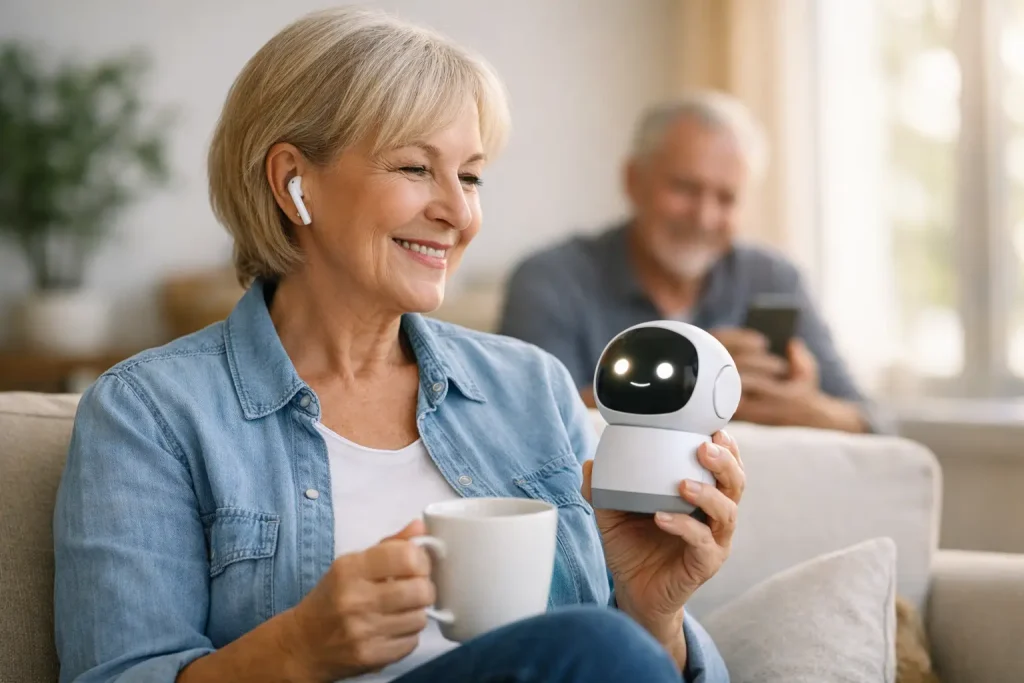
The quiet moments are often the hardest to explain. It might be breakfast without someone to share the newspaper with, an afternoon when the house feels unusually still, or a thought that would be nice to say out loud. Can AI ease loneliness in moments like these? It can offer a caring layer of everyday connection – not by replacing the people who matter, but by making conversation, encouragement, and small moments of engagement easier to find.
For many adults aged 55+, living independently is a source of pride. It can also mean there are more hours in the day when friends are busy, family lives farther away, or familiar routines have changed. Loneliness is not a personal failing, and it is not limited to people who live alone. Someone can have a full calendar and still miss feeling seen, heard, and included.
A thoughtfully designed AI companion can help fill some of those everyday gaps with a simple hello, a familiar question, a favorite game, or a gentle prompt to call someone they care about. The value is not that a screen becomes a person. The value is that technology can make the day feel a little more responsive, a little more social, and a little more like your own.
Can AI Ease Loneliness Without Replacing People?
Yes, with an honest understanding of what AI can and cannot do. AI companionship works best as a complement to human relationships. It can be available when a friend is at work, a family member is in another time zone, or someone simply wants to talk through a memory before it fades from the moment.
A good conversation can begin with something wonderfully ordinary: “How did you sleep?” “What are you making for lunch?” “Tell me about the music you loved in your twenties.” For someone who has spent a lifetime caring for others, being asked a genuine question can feel meaningful. When an AI remembers that a person enjoys gardening, follows baseball, loves jazz, or has grandchildren visiting on Saturdays, conversations can feel more personal than a one-size-fits-all notification.
That personal touch matters. Loneliness is not always about being physically alone. Often, it is about lacking regular moments of recognition. A companion that notices a favorite topic or remembers a planned outing can create a sense of continuity from one day to the next.
Still, AI should never be presented as a substitute for a daughter’s laugh, a neighbor stopping by, a book club discussion, or a long conversation with an old friend. Its role is smaller and, in many ways, practical: helping make connection more available between those valuable human moments.
The Everyday Ways AI Can Bring More Warmth
The most useful AI companionship is rarely flashy. It fits gently into everyday life and meets people where they are. For one person, that may mean a cheerful morning chat over coffee. For another, it may be an afternoon trivia question, help organizing a thought for a birthday card, or a reminder to water the plants before heading out.
Regular conversation can be especially welcome when it feels natural rather than demanding. There is no need to schedule a call, drive somewhere, or worry about interrupting another person. Someone can chat for five minutes or stay awhile. They can tell the same family story again, ask a curious question, or simply enjoy a little company while folding laundry.
AI can also encourage connection beyond the conversation itself. A prompt such as, “You mentioned your sister enjoys old movies too. Would you like to send her a note about the film you watched?” can turn a passing thought into a real point of contact. A reminder about a weekly class or a friend’s birthday can support routines that already make life richer.
This is where the best technology stays in the background. It does not try to take center stage. It helps a person keep doing the things that reflect who they are: staying curious, remembering what brings them joy, and reaching toward the people and activities they value.
A sense of rhythm can matter as much as conversation
Many people feel more connected when their day has a comfortable rhythm. A warm greeting in the morning, a nudge to enjoy a favorite activity, and a chance to reflect in the evening can create small anchors in the day.
These moments are not about strict schedules or being told what to do. They are about choice. Some days, a person may want to talk about a recent family visit. On others, they may prefer a word game, a bit of local history, or a quiet prompt to remember a favorite vacation. The ability to choose matters because independence matters.
For family caregivers, that rhythm can offer reassurance too. With permission-based insights, loved ones may have a clearer sense of whether a parent or family member is engaging with their usual routines. That can open more meaningful conversations than a quick, worried “Are you okay?” Instead, they might ask, “I heard you were talking about your garden. What is blooming right now?”
What Makes an AI Companion Feel Supportive?
The technology itself is only part of the experience. The difference lies in how it makes someone feel. A supportive AI companion should be easy to use, patient, respectful, and free from pressure. It should not make adults aged 55+ feel as if they need to learn complicated devices or use the “right” words to be understood.
Voice and text options can be helpful because people have different preferences. Some enjoy speaking naturally, as they would to a friend. Others prefer typing at their own pace. What matters is that the experience feels approachable, not technical.
It should also respect privacy. Conversations, preferences, and family insights are personal. People should understand what information is collected, what is shared, and have control over those choices. Family visibility should always be permission-based, so support never comes at the expense of dignity or independence.
GreatDay is designed around this kind of everyday companionship: natural conversation, personalized reminders, gentle mental engagement, and meaningful prompts shaped by each person’s interests and routine. The aim is simple – help people feel valued, not forgotten, while giving families more warmth and less worry.
Where AI Has Limits
It helps to be clear-eyed about the trade-offs. An AI companion may be available at any hour, but it does not share a lifetime of family history in the way a close friend can. It can remember preferences, but it does not experience the world alongside someone. It may offer a thoughtful prompt, yet it cannot attend a grandchild’s recital, sit across the table at lunch, or offer the comfort of a familiar hand.
That is why the strongest approach is both-and, not either-or. Use AI to make quiet moments feel less empty and to support the routines that help people stay engaged. At the same time, make room for real-world relationships: a regular phone call, a neighborhood walk, a hobby group, a family meal, or a message to someone who has been on your mind.
AI may be especially helpful for adults who want more conversation without feeling like they are asking too much of busy relatives. It can also be useful for families who want a parent to have companionship between visits. But it depends on the person. Some will enjoy daily chats; others may use it mainly for reminders, games, and occasional conversation. There is no single right way to use a companion tool.
A Small Conversation Can Change the Feel of a Day
Connection does not always arrive as a grand gesture. Sometimes it is a question about a favorite recipe. Sometimes it is a laugh over a tricky trivia answer. Sometimes it is the simple comfort of being greeted by name and invited to share what is on your mind.
When technology is built with warmth, simplicity, and respect, it can make more room for those moments. It can remind us that independent living does not have to mean going through every quiet hour alone – and that a little everyday companionship can give a person one more reason to smile.