
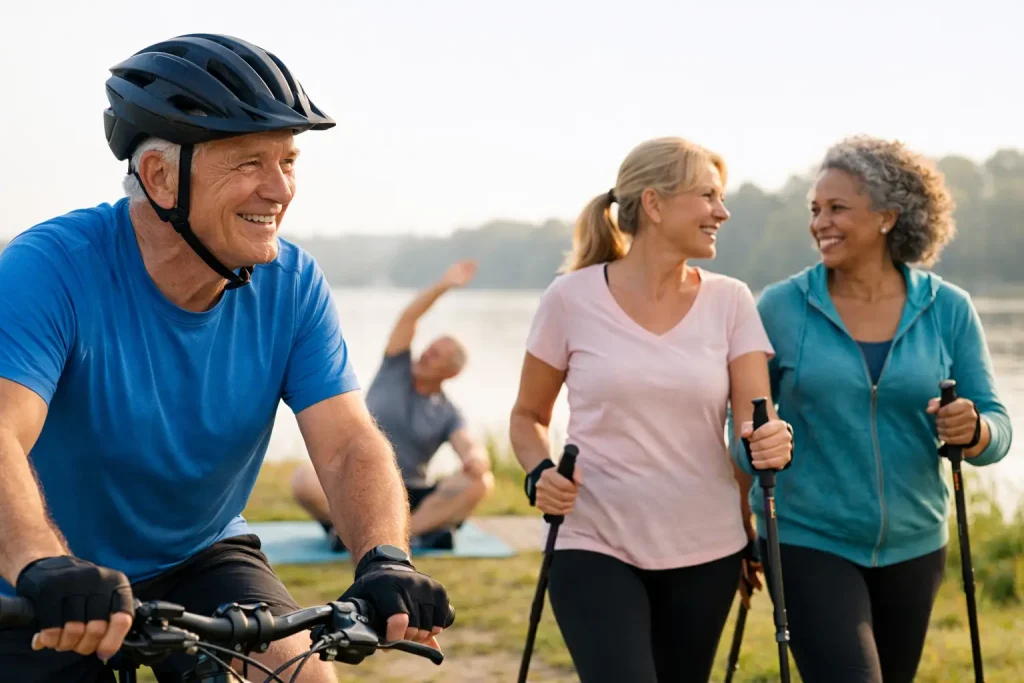
A walk around the block can feel very different when it is framed as a chance to catch up, notice the gardens, or pick up a favorite coffee. That small shift is at the heart of finding ways to encourage senior exercise: make movement part of a life someone already enjoys, rather than another task to check off.
For adults aged 55+, staying active is often less about motivation in the abstract and more about comfort, confidence, routine, and having a reason to get moving. For family caregivers, the most helpful approach is usually encouragement without pressure. The goal is not to take over someone’s routine. It is to help create more moments that feel energizing, social, and genuinely their own.
Ways to Encourage Senior Exercise That Feel Natural
1. Start with the activities they already like
The best activity is rarely the one that sounds most impressive. It is the one a person will want to do again next week. Someone who loves music may enjoy dancing in the kitchen or joining a low-key dance class. A nature lover might prefer gardening, birdwatching walks, or an afternoon stroll through a local park.
Ask about favorite activities from earlier chapters of life, too. Maybe they used to swim, play golf, tend a garden, or walk a dog. Interests do not have to return in exactly the same form. A shorter walk, a few holes with friends, or time watering patio plants can be a welcome way back into regular movement.
2. Make the first step almost too easy
When a plan feels large, it is easy to postpone. A ten-minute walk after breakfast or a few minutes of gentle stretching while the coffee brews can feel manageable. Once a routine begins to feel familiar, it may naturally grow. But it does not need to grow to count.
Avoid treating consistency as an all-or-nothing test. A busy day, bad weather, travel, or simply a low-energy morning can change plans. The helpful habit is returning to movement kindly, not criticizing a missed day.
3. Build movement into existing routines
New habits take less effort when they are attached to something that already happens. A walk after lunch, standing and moving during television commercials, or a few favorite songs while preparing dinner can give activity a dependable place in the day.
For families, a regular phone call can become a gentle prompt: “What was the best part of your walk today?” This feels more personal than asking whether someone exercised. It recognizes the experience, not just the accomplishment.
4. Give movement a social reason
Many people are more likely to keep plans when another person is involved. Invite a neighbor for a stroll, arrange a weekly walk with a friend, or make a grandchild’s visit active with a game in the yard. The conversation and shared laughter can be as motivating as the activity itself.
This is especially useful when distance makes regular visits difficult. A family member can set a shared step or walking goal, compare the birds seen on separate walks, or schedule a phone call while each person takes a route near home. The point is connection, not competition.
5. Offer choices, not commands
Independence matters. “Would you rather take a walk before lunch or after?” respects a person’s preferences far more than “You need to exercise.” A choice restores ownership and makes activity more likely to fit the rhythm of the day.
The same principle applies when suggesting new options. Some adults enjoy group classes, while others prefer private, quiet activities. Some like structure and a calendar; others want to decide based on the weather and their mood. There is no single right style of being active.
6. Remove the small barriers that stop a good plan
A plan can be appealing and still be inconvenient. Comfortable shoes that are easy to find, a hat near the door, a clear walking route, or an agreed time with a friend can turn an intention into an outing.
Think practically about the setting, too. If getting outside is not appealing that day, a familiar indoor option helps keep the routine flexible. Walking through a mall, moving along with a favorite music program, light housework, or tending to indoor plants may all offer a satisfying alternative. Variety protects the habit from becoming dull.
7. Celebrate how movement feels
Numbers can be motivating for some people, but they are not the only measure of a good day. Notice the details that make movement worthwhile: a brighter mood after fresh air, a friendly conversation on the route, the satisfaction of caring for a garden, or the simple pleasure of moving to a much-loved song.
Specific encouragement lands best. Rather than saying, “Good job exercising,” try, “It sounded like you really enjoyed seeing everyone at the class,” or, “I love that you made time for your walk even though the afternoon got busy.” It shows that you are paying attention to what matters to them.
8. Use reminders as invitations
A reminder should feel like a helpful nudge, not a demand. A simple message such as “Your music-and-movement time is coming up” can make a routine easier to remember while keeping the tone light. Voice reminders can be particularly convenient for people who prefer speaking over navigating apps or screens.
GreatDay can support these everyday rhythms with warm conversation, personalized reminders, and prompts based on the activities a person enjoys. It is designed to complement family connection, not replace it. The person using it stays in control of their routine and their information.
Encourage Senior Exercise Without Making It Feel Like Pressure
The language around activity matters. Well-meant concern can sometimes sound like criticism, especially if a loved one feels watched or managed. Focus on shared possibilities instead: “Would you like company for a walk?” or “I found a class that sounds like something you might enjoy.”
It also helps to listen for the real obstacle. “I do not feel like it” might mean the activity is boring, the timing is awkward, the route is unappealing, or they would rather not go alone. A curious question opens the door: “What would make that easier or more enjoyable?”
Family caregivers may feel tempted to push when they worry. Yet steady, respectful support tends to last longer than repeated reminders. Let the older adult set the pace where possible, and keep the relationship at the center. A person who feels heard is more likely to share what is and is not working.
Keep the Focus on Everyday Independence
Movement does not have to look like a workout to matter in daily life. Carrying groceries, walking to meet a friend, gardening, tidying a room, playing with a pet, and taking the stairs when it feels comfortable are all opportunities to stay engaged with the world.
A balanced routine often includes different kinds of movement across the week, but it depends on the person’s interests, schedule, and comfort. Someone who enjoys a regular class may thrive on structure. Another person may prefer several short, active moments woven into an otherwise relaxed day. Both approaches can support an active, independent lifestyle.
If someone is considering a brand-new activity or has questions about what feels appropriate for them, a trusted health professional can offer personal guidance. That is not a reason to wait for the perfect plan. It is simply one way to begin with confidence.
The most lasting encouragement often sounds simple: “Want to go together?” One invitation, one favorite song, or one familiar route can give the day a little more energy – and a reason to smile.